Most supplement brands sourcing from China will never stand on their manufacturer's production floor before the first purchase order is signed. That is a manageable risk, but only if you replace the site visit with a structured remote audit rather than a leap of faith. The difference between the two is method: a defined document request, independent verification of every certificate, a live guided video tour with your agenda (not the factory's), and a scored decision at the end. This guide gives you that method as a working checklist. It is written from the manufacturer's side of the table, because knowing what a well-run factory can produce on demand is precisely what exposes the ones that cannot.
Why should you audit a factory before placing your first order?
Because in supplements, you own the failure either way. Under US law, a brand owner distributing dietary supplements is responsible for ensuring products are manufactured to GMP, whoever actually made them; European and other regulators take similar views of the party placing goods on the market. If your contract manufacturer ships an underdosed, contaminated, or adulterated batch, the recall, the retailer delisting, and the lawsuit have your name on them.
An audit also solves a more mundane problem: distinguishing factories from middlemen. A meaningful share of supplement suppliers on B2B marketplaces are trading companies presenting a portfolio of other people's plants. Trading companies are not inherently bad, but you should never believe you are buying factory-direct when you are not, because it changes pricing, accountability, technical access, and your legal counterparty. A remote audit surfaces this within the first hour: a trading company cannot walk you live through a production floor it does not control, and its documents will name entities that do not match. Finally, the audit sets the tone of the relationship. Suppliers calibrate their diligence to the sophistication of the buyer, and a professional audit marks you as a customer whose batches deserve first-rank attention.
What documents should you request before the audit call?
Send a document request list one to two weeks before your video audit. A well-organized factory will return most of this within days; long delays and excuses are themselves data. Request:
- Business license (with English translation) showing the registered legal name, address, and business scope covering food or health food manufacturing. The name and address must match every certificate that follows.
- Certification certificates: GMP (for US-focused buyers, NSF certification to ANSI 455-2 is the meaningful dietary supplement standard), FDA facility registration number, and food safety certifications such as BRCGS, ISO 22000, FSSC 22000, and HACCP, plus HALAL or organic certificates if relevant to your line.
- Quality manual or quality system overview, including organizational chart of the quality unit and its independence from production.
- Example batch record (redacted is fine) for a product similar to yours, showing the documentation trail from raw material receipt to finished product release.
- Example certificates of analysis for finished product and key raw materials, and a list of which tests are in-house versus subcontracted to third-party labs.
- Stability program summary: how shelf life claims are supported.
- Recall and complaint procedures, plus whether the facility has undergone regulatory inspection (for example an FDA inspection) and the outcome.
- Traceability description: how a finished lot links back to raw material lots and forward to shipments.
Read the batch record most carefully. It is the hardest document to fake convincingly, and it reveals whether the quality system exists on the floor or only in the marketing deck.
Which certifications matter, and how do you verify they are real?
Certification names are cheap to type into a website; certificates are checkable. Verify every one independently, which takes under an hour:
- NSF GMP (ANSI 455-2): search the company name in NSF's public certification listings. Confirm the certified site address and scope (dosage forms covered).
- FDA registration: a facility registration number can be confirmed, and remember what it means; FDA registration is a listing, not an approval or endorsement. Any supplier claiming FDA approved status for supplements is either confused or dishonest, and both are disqualifying.
- BRCGS: check the BRCGS Directory for the site, its grade, and audit date.
- ISO 22000 / FSSC 22000: confirm via the certification body named on the certificate; FSSC maintains a public database of certified organizations.
- HALAL and organic: verify with the issuing body and check scope; an EU organic certificate, for instance, covers specific product categories, not everything the plant makes.
Three cross-checks catch most fraud: the legal entity name on each certificate must match the business license and your draft contract; the site address must match where your product will actually be made; and the scope must cover your dosage form. A certificate for a sister plant, a parent company, or a different product class is not your certificate. A manufacturer that publishes its full certificate set openly, as Zhongke Zhigu does on its certifications page, is making this verification easy on purpose; treat opacity as a signal in the other direction.
What should you look for during a live video factory tour?
Insist on a live, unedited video walk-through rather than a produced facility film, and send your route in advance: receiving, warehousing, production, in-process control, packaging, and the laboratory. On the call, direct the camera yourself. Watch for:
- Receiving and warehouse: quarantine segregation of untested materials, status labeling (quarantine, released, rejected), temperature and humidity monitoring, pest control stations, FIFO organization.
- Gowning and hygiene: airlocks, hand-washing compliance, gowning discipline of the people you see, not just the visitors.
- Production areas: cleanliness of equipment interiors and undersides, line clearance practices between batches, room status boards naming the current product and batch, pressure differentials in sensitive areas.
- Equipment condition: calibration stickers with valid dates, maintenance logs, absence of improvised repairs on product-contact equipment.
- In-process control: operators actually performing and recording checks (fill weight, hardness, seam inspection for softgels) at stated frequencies.
- Laboratory: instruments consistent with claimed in-house testing (HPLC for potency, microbiology suite), sample retention library, logbooks in active use.
- People: ask an operator or line QA, through the interpreter if needed, what they do when a check fails. The quality of that unrehearsed answer tells you more than any slide.
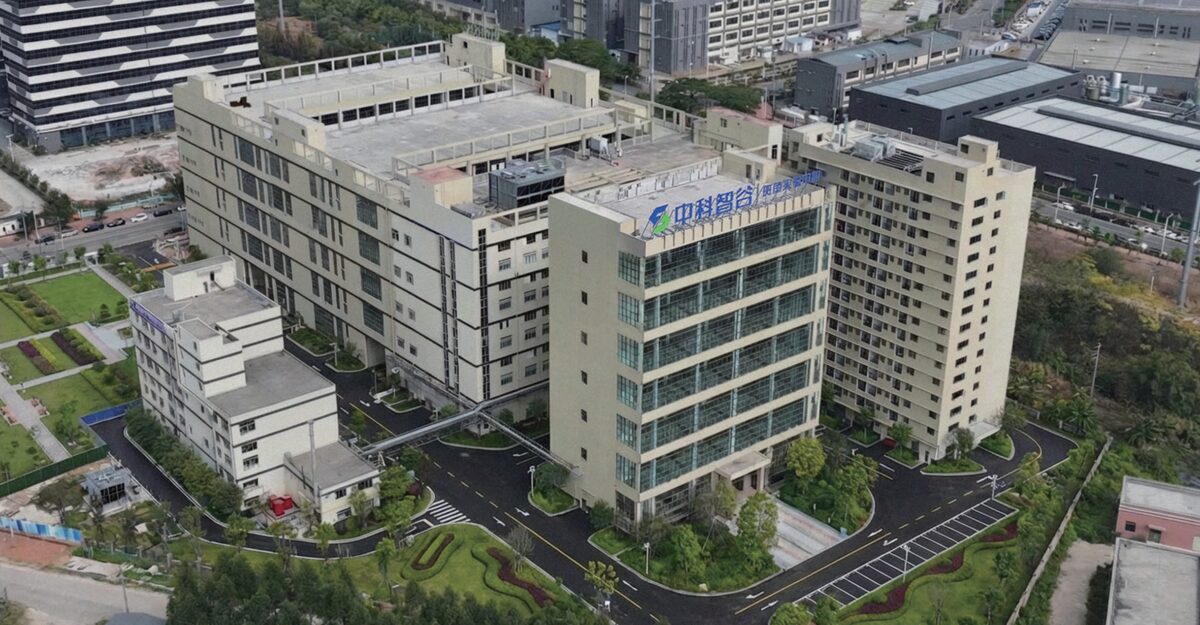
Cross-reference what you see against the factory's stated capabilities. A plant claiming multiple dosage forms should visibly have distinct lines and rooms for each; a facility such as Zhongke Zhigu's in Qingyuan, which runs six dosage forms (softgel, capsule, gummy, tablet, liquid, powder) plus its own botanical extraction workshop, can and should show you each area on request; the layout you can preview on its manufacturing page should match the camera. Where claims and camera diverge, believe the camera.
What questions reveal the real quality system?
Documents show the system as designed; questions show the system as lived. Put these to the quality manager, not the sales representative, and treat the sales rep answering all of them as a yellow flag:
- What identity testing is performed on every incoming raw material lot, and what happens when a material fails?
- Which finished-product tests are performed in-house versus by third-party labs, and can we see a recent third-party report?
- How are potency overages determined, and how is label claim verified through shelf life?
- Walk me through your last deviation or out-of-specification investigation. What was the root cause and the corrective action?
- How many customer complaints did you log last year, and what were the top categories?
- Have you conducted a mock recall? How long did it take to reconcile the lot?
- Who can release a batch, and can production overrule quality?
Strong answers are specific, dated, and slightly imperfect; real quality systems have deviations, complaints, and CAPAs, and can discuss them calmly. Suspicious answers are perfect: zero complaints, zero deviations, one hundred percent pass rates. A quality system with no recorded failures is a quality system that records nothing.
How do you assess traceability and supply chain transparency?
Traceability is the difference between a contained incident and a catastrophic one. Test it concretely: pick a finished lot number from the example CoA and ask the factory to demonstrate, on camera or by document, the chain from that lot back to each raw material lot, supplier, and incoming test record, and forward to which customers received it. A capable factory completes this exercise in minutes from its batch records or ERP; industry good practice, echoed in mock-recall expectations under most GMP and food safety schemes, is full reconciliation within hours, not days.
Go one layer deeper on your critical ingredients. Ask who the approved suppliers are for your hero active, how those suppliers were qualified, and whether the factory has vertical capability that shortens the chain; in-house botanical extraction, for example, moves a major contamination and adulteration risk under the factory's own quality system instead of a third party's. This is an area where manufacturers increasingly compete openly; Zhongke Zhigu documents its lot-level, full-chain approach on its traceability page, and its own extraction workshop is part of that argument. Whatever your shortlist, make lot-level traceability a contractual requirement, not a hope.
What red flags should end the conversation immediately?
Some findings are negotiable; these are not:
- Certificates that fail verification: wrong entity name, wrong address, expired dates, or absence from the certifier's public directory.
- Refusal of a live video tour of the actual production floor, or repeated rescheduling with only produced videos offered.
- Claims of FDA approval for supplements, or guarantees that any formula is compliant everywhere with no discussion of your market's rules.
- No batch documentation: inability to produce a redacted batch record or lot-specific CoAs on request.
- Perfect-record answers: zero deviations, zero complaints, no recall procedure, or a quality unit reporting to sales or production.
- Pricing far below the cluster of other qualified quotes for the same specification, which is almost always paid for in ingredient identity or potency.
- Entity mismatch at contract time: the company on your contract or invoice is not the certified manufacturer and no transparent explanation is offered.
Score everything else (document quality, tour findings, QA interview, responsiveness) and rank your shortlist rather than seeking a perfect factory; you are choosing the partner whose system you trust to catch its own mistakes. And keep auditing after the first order: annual document reviews, third-party testing of received lots on a defined schedule, tracking of complaint and deviation trends, and eventually an in-person visit once volumes justify the trip. Supplier qualification is a program, not a one-time gate.
If you are building an audit shortlist now, Zhongke Zhigu will support the process described here rather than resist it: document packages, live video tours of the Qingyuan facility, and direct access to quality staff are standard for serious buyers. Send your audit checklist and product requirements through the contact page and the team will schedule a session against your agenda.
Frequently asked questions
Should I hire a third-party audit firm instead of auditing remotely myself?
Ideally do both. A third-party on-site audit (SGS, Intertek, Eurofins and similar firms offer supplement GMP audits in China) verifies physical reality, while your own remote audit builds the technical relationship and tests responsiveness. For a first order of meaningful value, the combined cost is small insurance.
How long does a proper remote audit take?
Plan two to three weeks end to end: a few days for the factory to assemble documents, several days for your review and certificate verification, a two-hour live video tour plus QA interview, and time for follow-up questions. The elapsed time overlaps naturally with sampling and quotation.
What is the difference between a trading company and a contract manufacturer?
A contract manufacturer owns and operates the production facility; a trading company resells manufacturing from factories it does not control. Trading companies can add sourcing convenience, but you lose direct technical access and quality accountability. Verify by matching the business license and certificates to the facility shown on the tour.
Can I rely on a factory's certificates without independent lab testing of my product?
No. Certifications validate the quality system, not your specific batch. Standard practice is to test at least identity, potency, and contaminants on early production lots through an independent laboratory, then move to a skip-lot testing scheme once the supplier has a track record with your products.
Do Chinese supplement factories allow in-person visits from overseas buyers?
Reputable ones welcome them, and an in-person visit remains the gold standard once order volumes justify travel. Many buyers now sequence it: remote audit and third-party testing for the first orders, then an on-site visit within the first year of the relationship.
What should be in the quality agreement I sign with the manufacturer?
At minimum: agreed product specifications, testing responsibilities and methods, documentation delivered per batch, change control (the factory must notify you before changing ingredients, suppliers, or processes), audit rights, complaint and recall procedures, and how out-of-specification results are handled. Sign it before the first production order, not after.