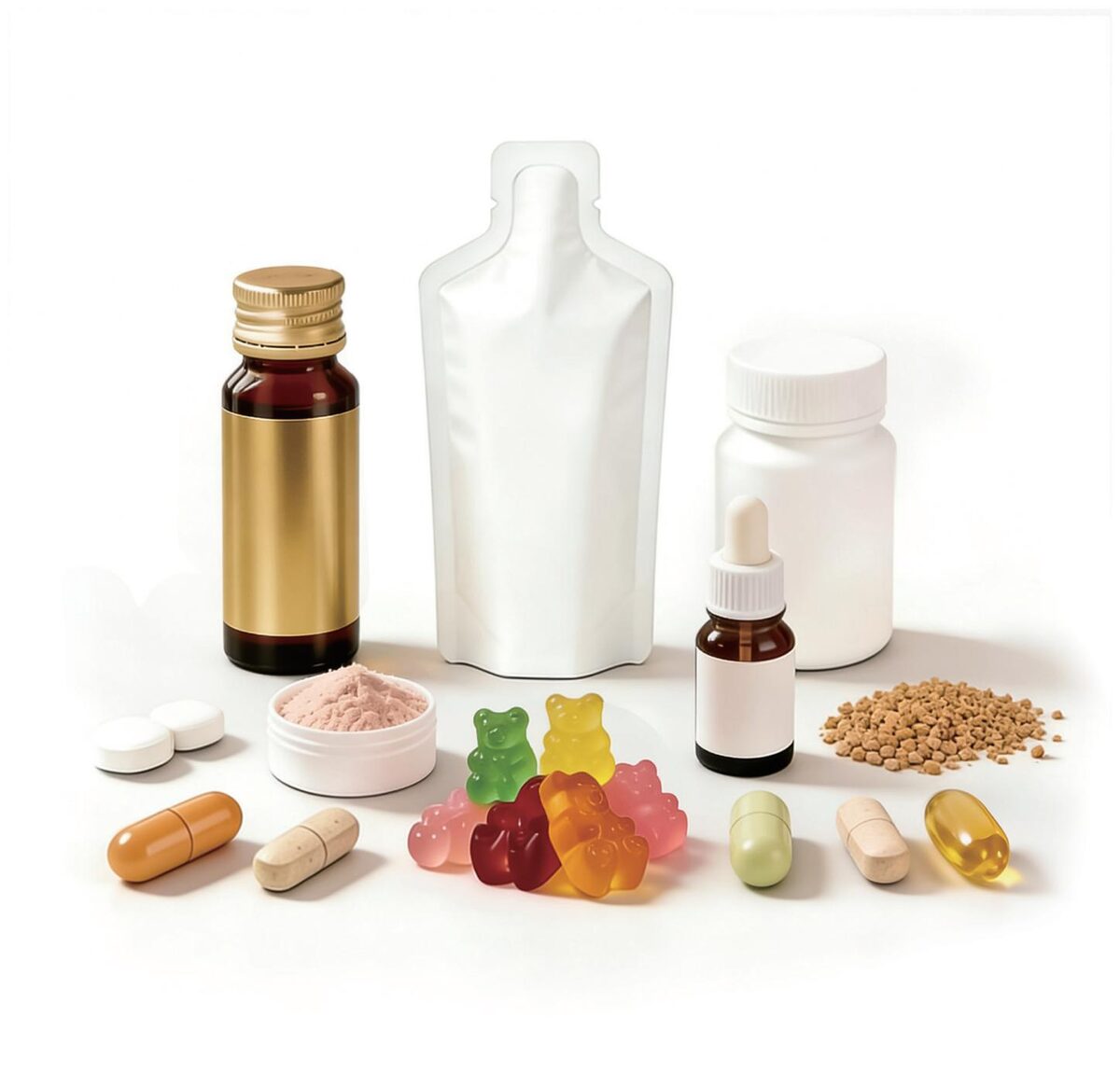
If you have never taken a supplement from idea to sellable inventory, the contract manufacturing process can feel like a black box: you send a formula and money in, and months later pallets come out. In reality, softgel OEM/ODM projects follow a well-defined sequence of about ten stages, each with its own deliverables, decisions, and failure modes. Understanding that sequence before you start is the single best way to compress your launch timeline, because most delays in first projects come from the brand side: late artwork, undecided specifications, and missing regulatory information. This guide walks through each stage as it actually runs inside a softgel contract manufacturing operation, so you know what to prepare, what to ask, and what good looks like at every step.
What is the difference between OEM and ODM in supplement manufacturing?
The two models differ in who owns the formula. In an OEM (Original Equipment Manufacturer) project, you bring your own formulation, and the factory manufactures it to your specification; you control the intellectual property and the differentiation, at the cost of longer development and full responsibility for the formula's performance. In an ODM (Original Design Manufacturer) project, you select and optionally adapt a formula the manufacturer has already developed and validated, then apply your brand; you trade some exclusivity for dramatically faster launch, lower development cost, and a formula with existing stability data.
Neither model is superior; they suit different moments. New brands and market tests usually start ODM. Established brands with clinical positioning or patented ingredients go OEM. Many companies run both: ODM products fund the catalog while OEM products build the moat. The process below covers the full OEM path; ODM projects simply move faster through stages two and four because the formulation and often the stability work already exist.
What happens during the initial inquiry and requirements briefing?
Everything downstream is shaped by the quality of the brief, so this stage deserves more effort than most buyers give it. You provide, at minimum: the product concept and target actives with doses per serving; the target market (US, EU, Middle East, Southeast Asia), because regulatory rules differ on permitted ingredients, dosages, and claims; shell preference (bovine gelatin or a plant-based HPMC shell); target capsule size and count per bottle; packaging format; estimated annual volumes; and your launch timeline. The manufacturer responds with feasibility feedback: whether the actives suit a softgel fill, whether the dose fits the intended capsule size, and any market-specific constraints. Confidentiality is normal at this stage; signing an NDA before exchanging proprietary formulas is standard practice and a reasonable thing to request. Expect a competent technical team to come back with questions rather than an instant quote; a factory that quotes a vague brief without questions is pricing a product it has not understood.
What happens during formula development and feasibility work?
For OEM projects, the R&D team translates your ingredient list into a manufacturable fill: selecting the carrier oil or paste system, checking chemical compatibility between actives, setting antioxidant protection for oxidation-prone materials, and calculating fill weight against capsule size. This is where problems are cheapest to solve; an active that crystallizes out of suspension, exceeds the fill volume, or degrades in contact with another ingredient must be caught here, not at scale. The team also sets potency overages so the product meets label claim through shelf life, and defines the shell: gelatin type or plant polymer, plasticizer system, color, and opacity (opaque shells protect light-sensitive fills).
Development depth varies enormously between manufacturers, and it is worth probing. A factory with a genuine formulation lab and scientist-led programs, such as the academician-led team behind Zhongke Zhigu's R&D and innovation work, can propose solutions (alternative ingredient forms, emulsification systems, enteric options) rather than simply reporting that your formula does not work. For ODM projects this stage collapses to selecting a developed formula and agreeing any permitted adjustments.
What happens during quotation and commercial agreement?
With a feasible formula defined, the manufacturer issues a quotation covering the fill formula cost, shell, primary and secondary packaging, testing, and tooling if a custom capsule shape is involved, quoted against one or more order quantities. Read quotes for completeness, not just price: confirm what testing is included per batch, whether stability studies are covered, who pays for artwork plates, and the trade terms (EXW, FOB, CIF), which materially change your landed cost. This is also where minimum order quantities and lead times are fixed. Industry-wide, softgel MOQs are commonly discussed in the hundreds of thousands of capsules and first-order lead times in the 8-to-12-week range from artwork approval, but these are general industry patterns; treat them as orientation only, and get project-specific numbers in writing. For Zhongke Zhigu's terms on a defined project, ask directly through the contact page. Alongside the commercial terms, negotiate the quality agreement now: specifications, batch documentation, change control, and audit rights, so quality obligations are contractual before money moves.
What happens during sampling and prototyping?
Sampling turns the paper formula into capsules you can hold, test, and taste. Typical rounds include lab-scale samples of the fill and shell, then pilot samples in your chosen size and color. Evaluate samples properly: send them for independent assay of key actives, check organoleptics (odor, aftertaste, swallowability), and if your product targets a hot-climate market, informally stress samples in heat before you approve them. Iterate now, not after tooling and artwork; each sampling round typically takes two to four weeks depending on material lead times, and two rounds are normal for a custom formula. Approve samples formally and in writing, because the approved sample plus the written specification become the standard your production batches are judged against.
What happens during regulatory and label compliance review?
In parallel with sampling, the compliance work runs: confirming every ingredient is permitted at dose in your target market, building the supplement facts or nutrition panel to that market's format, and reviewing your claims. The division of labor matters here; the manufacturer ensures the product and facility comply with manufacturing regulations and provides supporting documents (certificates, specifications, CoAs, free sale certificates where applicable), while responsibility for the label and marketing claims in your market stays with you as the brand owner, usually supported by your own regulatory consultant. Confirm the facility credentials your market requires early: for the US, FDA facility registration and GMP conformance (NSF certification to ANSI 455-2 is the recognized dietary supplement standard); for other markets, certifications such as BRCGS, FSSC 22000, ISO 22000, HALAL, or organic may be prerequisites for your retailers. A manufacturer's published certification portfolio should map cleanly onto your market list before you commit.
What happens during packaging design and artwork approval?
Packaging runs on its own timeline and is the most common cause of launch delay from the brand side. You select the packaging system (bottle with induction seal and desiccant, blister cards, or pouches), and your designer builds artwork on the manufacturer's dielines. The factory checks artwork technically: barcode integrity, mandatory label statements for your market, batch code and expiry placement, and print feasibility. Expect physical or digital proofs before mass printing. Two practical rules: never print packaging before samples and formula are final, and always order slight overage on printed components to cover line losses. Artwork approval is usually the milestone that starts the production clock, so late artwork delays everything behind it.
What happens during raw material procurement and incoming quality control?
On order confirmation, the factory purchases your fill actives, oils, shell materials, and packaging components from its approved supplier list. Every incoming lot goes through quarantine and testing before release to production: identity testing at minimum, plus potency and contaminant testing per the material's risk profile, with certificates of analysis reconciled against the factory's own results. Lot numbers are recorded into the batch documentation at receipt, which is the foundation of finished-product traceability; a mature system can link your finished lot back to every raw material lot and supplier, the model documented on Zhongke Zhigu's traceability page. Procurement is often the longest single lead-time block, since specialty actives can take weeks to arrive; if your formula uses a long-lead or single-source ingredient, ask whether the factory can forecast and pre-book it against your rolling orders.
What happens during encapsulation and production?
Softgel production is a continuous choreography of three processes. The fill is compounded: oils and actives blended, milled where needed for suspension uniformity, deaerated, and protected from oxygen. The gel mass is prepared: gelatin or plant polymer melted with plasticizer and water, colored, and matured. At the rotary die encapsulation machine, two gel ribbons are formed, filled with a precisely metered dose, and heat-sealed into capsules in one motion. In-process controls run continuously: fill weight checks, seam thickness, and shell parameters. The capsules then move to tumble drying and drying tunnels for hours to days until shell moisture and hardness hit specification, followed by inspection to remove leakers and deformed capsules, then polishing, and finally bottling or blistering with batch coding on the packaging lines. Scale and redundancy matter for schedule reliability; a facility running on the order of 20 million softgels per day across multiple lines, as Zhongke Zhigu's manufacturing operation does, can absorb a machine stoppage without your ship date absorbing it.
What happens during finished product testing and batch release?
Before anything ships, the quality unit tests the finished batch against the agreed specification: assay of declared actives, microbiological limits, heavy metals, disintegration or rupture testing, and physical checks (weight variation, appearance, seal integrity). Results are compiled into the certificate of analysis, and the batch record (every step, signature, and in-process result from the run) is reviewed for completeness. Only the quality unit, independent of production, releases the batch. As the buyer, you should receive the finished-product CoA per batch as standard, and for early orders it is normal practice to hold your own release: independent third-party testing of shipped samples before the goods leave, or before you distribute them. Retention samples from each batch stay at the factory for the shelf life of the product, supporting any future investigation.
What happens during packing, shipping, and delivery?
Released goods are cartonized, palletized, and booked against your agreed trade terms. Your decisions here are practical: sea freight is economical for full production runs (roughly four to six weeks to North American or European ports, industry-typical), air freight buys speed for launches at several times the cost, and hot-season shipments of softgels deserve a conversation about container type, stowage below deck, and desiccants. The factory provides the export document set: invoice, packing list, CoA, and certificates your customs broker or importer requires (for some markets, health or free sale certificates). Plan your reorder before the first container lands; with your specification, artwork, and materials already qualified, repeat orders run substantially faster than the first, and a rolling forecast lets the factory pre-position long-lead materials.
That is the whole machine, from brief to landed pallets. The process rewards buyers who prepare: a complete brief, decisive sample feedback, early artwork, and a signed quality agreement can compress a first project by weeks. If you are planning a softgel launch, whether around your own formula or a proven ODM base, the technical team at Zhongke Zhigu can walk your specific project through this sequence and flag the long-lead items before they bite; start with your brief through the contact page.
Frequently asked questions
How long does a first softgel OEM project take from inquiry to delivery?
Industry-typical first projects run roughly four to six months end to end: several weeks for development and sampling, artwork and compliance in parallel, then production and freight. ODM projects using an existing formula can be substantially faster. Repeat orders skip development entirely and run much shorter.
Who owns the formula in an ODM project?
The manufacturer developed it and generally retains ownership, and similar formulas may be supplied to other customers unless you negotiate exclusivity. If differentiation is strategic for you, either negotiate an exclusivity or customization clause or invest in an OEM formula you own outright.
Can I supply my own key ingredient to the factory?
Usually yes; this is called consignment or buyer-supplied material, and it is common for branded or patented actives. Expect the factory to test the material on receipt like any other lot, and clarify liability, yield accounting, and replacement terms for material lost in processing before you ship it.
What information must be on my supplement label, and who is responsible for it?
Each market defines mandatory elements; in the US that includes a Supplement Facts panel, ingredient list, business name and address, and required disclaimers for structure-function claims. The brand owner is legally responsible for label compliance, while the manufacturer supplies the data (composition, per-serving amounts) the label is built from.
What happens if a production batch fails testing?
A failed result triggers a documented out-of-specification investigation: retesting under controlled rules, root cause analysis, and a disposition decision. Batches that genuinely fail specification are rejected and reworked or destroyed, never shipped. Your quality agreement should require notification of any OOS affecting your product, with records available to you.
Do I need to visit the factory during my first project?
It is not mandatory, and many first projects run entirely remotely on document audits, live video tours, and third-party testing. An in-person visit adds most value once volumes grow, typically within the first year. Choose a manufacturer that supports structured remote auditing rather than resisting it.